

Arrow-lok Digital Fusion System. Simple, easy and effective.
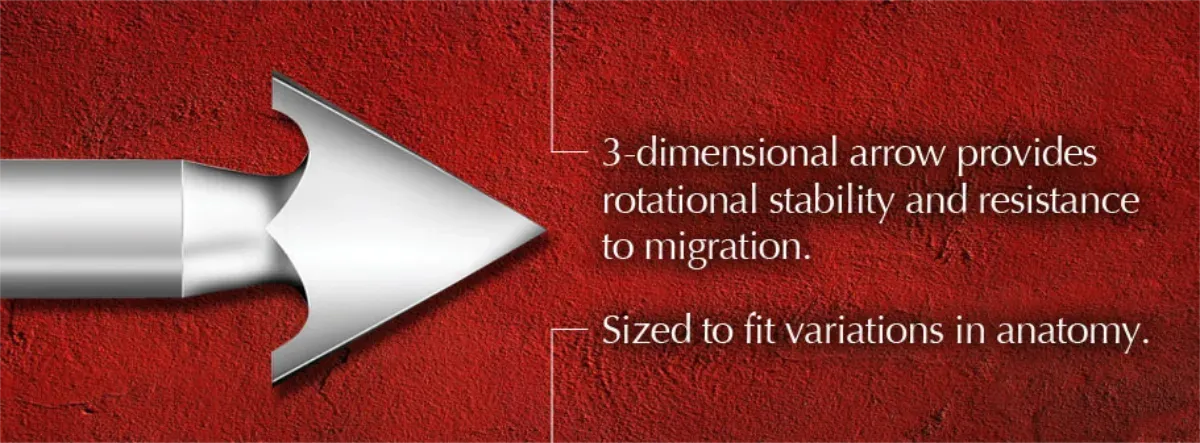
3-dimensional arrow provider rotational stability and resistence to migration.
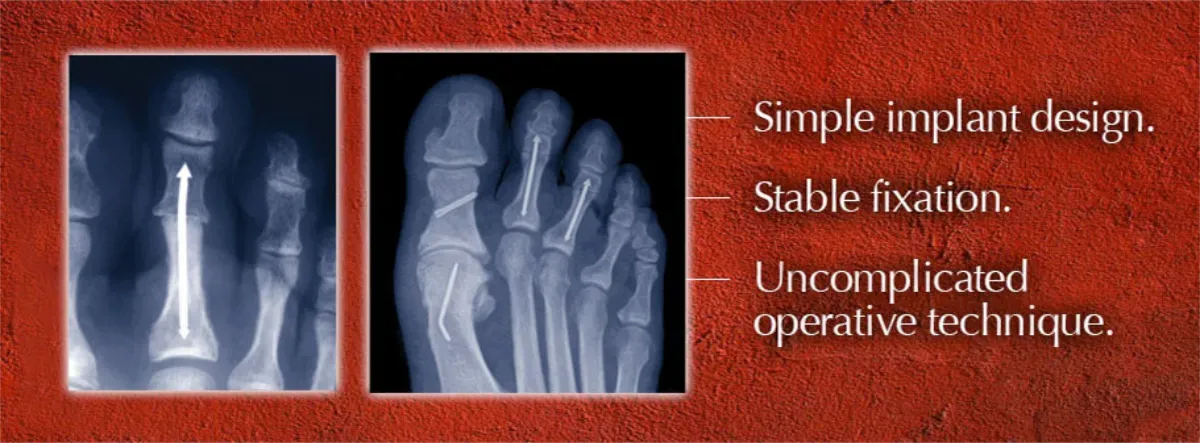
Simple implant design. Stable fixation. Uncomplicated operative technique.
Proven material. Strong biocompatable.
Arrow-lok Digital Fusion System. Simple, easy and effective.
3-dimensional arrow provider rotational stability and resistence to migration.
Simple implant design. Stable fixation. Uncomplicated operative technique.
Proven material. Strong biocompatable.

Author: admin

Arrowhead Medical Device Technologies pierces patent challenge

l device startup

By Kevin McKenzie
Originally published 06:32 p.m., March 26, 2014
Updated 06:49 p.m., March 26, 2014

For Arrowhead Medical Device Technologies LLC, winning a first patent is a milestone too often overlooked in the medical device manufacturing industry.

“Having a patent issued is a big milestone,” said Patrick Mullaney, Arrowhead’s president. “It’s a big milestone that all too often is unappreciated and not respected.”

On Tuesday, a new patent for the company’s signature product — a thin, stainless steel rod with arrowhead-shaped tips at both ends that is implanted to fuse toe joints — will be issued, said Tom Twardzik, company co-founder and vice president of marketing and operations.

Invented by an Atlanta-area surgeon, Dr. Scott R. Roman, the patent for “intramedullary fixation device and methods for bone fixation and stabilization” has been four years in the making and provides legal protection from copy cats.

“It really does substantiate the company when you do get a patent,” Mullaney said. “There are companies that operate with no patents.”

Mullaney, 46, and Twardzik, 57, founded Arrowhead in 2010. Both are former employees of Smith & Nephew, the London-based medical device manufacturer with operations in Memphis.
Mullaney, in sales at Smith & Nephew beginning in 1991, left in 2004 to work for another orthopedic device maker. Twardzik worked in marketing and was “downsized,” rehired and downsized again.

With private investors in Memphis and in Georgia, the company has invested close to $3 million in the last three years making and marketing its Arrow-Lok digital fusion system for hammer toe, which joint condition that causes toes to be bent like a hammer.

The company’s products have been used in more than 2,000 procedures in a market where 500,000 are done a year, the executives said.

Arrowhead Medical Device Technologies pierces patent challenge : Memphis Commercial Appeal
Dr. Paul Hutchison, a Memphis podiatrist, said the company product is the primary fixation device he now uses for hammer toes.

“What you’re looking for is ease of usage, but reproducible results,” Hutchison said. “This product has entitled me to have that,” said Hutchison, who also described it as awesome, neat and innovative.

Mullaney, Twardzik and one sales-related position form the company’s full-time staff. About 80 independent field representatives, who also market products for other firms, spread the word about the company’s products to physicians in the region.

Mullaney, who helped found a previous medical device startup that was sold and learned business basics running a M r. Ding-A-Ling ice cream franchise with his brothers in New York, said starting up a medical device company is very difficult.

But he and Twardzik counted off former employees of Smith & Nephew and related firms in Memphis that provide a foundation for medical device startups.

“The investment made in creating a company, even a small company like ours, translates to millions of dollars into the economy here,” Twardzik said.

As printed in the Commercial Appeal

Young Wife and Mother Enjoying a Life Free of Painful Hammertoes, Thanks to Atlanta Podiatrist and Memphis Medical Device Company

Suffering from hammertoes since she was a child, Jenecia Reames, 27, is finally beginning to enjoy a life free of the debilitating and painful condition, thanks to an inventive Atlanta podiatrist and an innovative Memphis-based medical device company.

Traditional K-Wire Fixation versus ARROW-LOK™ Digital Fusion System

Traditional K-Wire Fixation versus ARROW-LOK™ Digital Fusion System

Hammertoes is the common name for proximal interphalangeal joint flexion deformity, a progressive and often painful condition in which the toes are held in a flexed or bent position. Traditionally, the only surgical treatment has relied on Kirschner external wires or “K-wires” that are left protruding from the front of the toe for several weeks after surgery. Additionally, the wires have to be removed before the bones are fully healed, which can compromise stability or even cause the fusion to fail. Seeking “a better approach,” Scott Roman, DPM, of The Ankle and Foot Centers of Georgia, invented a new surgical implant for hammertoe correction about two years ago. The ARROW-LOK™ Digital Fusion System is now being marketed nationally by Memphis-based Arrowhead Medical Device Technologies, LLC.
When she saw Roman for the first time about three years ago, Reames considered having the K-wire surgery. “I was pregnant at the time so was unable to undergo surgery,” she explains. “But I also had an aunt who had had the surgery with wires on both feet, and she didn’t recommend it.”
Unfortunately, Reames’ condition worsened after her pregnancy. “I could get around, but the pain was constant all day. I had to have a footstool to keep my feet propped up, and any pressure at all would cause pain.” Going back to Roman in early 2012, Reames could easily see the difference in her X-rays. “The hammertoes were getting worse,” she says.
Fortunately, the ARROW-LOK system had become available by then, and the podiatrist recommended it to the young wife and mother. “Dr. Roman told me about the new implant and told me that it would be more convenient for me. I’d be back on my feet sooner.”
Reames opted to have her surgery on one foot at a time, and Roman operated on her left foot in June 2012, using the ARROW-LOK system to correct toes two through five (all but the big toe). Following the outpatient procedure, Reames returned home the same day and spent five days off her feet as much as possible. During her recovery, Reames utilized a medical ice machine for five weeks to reduce swelling, and continued to wear a boot to protect and support her foot for several more weeks. Roman also taught her how to exercise her foot to ensure flexibility as it healed.
“I was able to go back to work pretty quickly,” Reames says. “My swelling was about half what it was supposed to be, and now I’m wearing a shoe again. I have to guard against bumping the foot, of course, but for the most part I walk around like I never had a problem. And that’s why I had the second foot done.”
Following her excellent experience with her left foot, Reames had Dr. Roman perform the same procedure on the same toes of her right foot in early September.
Roman says he has used the ARROW-LOK system on patients of all ages, including many who had previously refused to have the surgery using K-wires. “Many patients worry about stubbing the toe with the wire sticking out or even accidentally pulling it out. The ARROW-LOK system is a comparatively anxiety-free postoperative experience for them.”
Reames’ experience has certainly inspired other family members to reconsider the surgery. “My father and sister are both looking at having the same the procedure. My father’s toes are as bad as mine were, and he’s been putting it off for years.”
Asked what she would recommend to others suffering from hammertoes, Reames quickly answers, “The first thing is I’d probably send them to Dr. Roman. The implants compared to the wires are great — and the ice machine really helped me during the recovery.”
Now healing from surgery on her right foot, Reames is looking forward to a more normal life. Whether she’s chasing after her lively two-year-old daughter, practicing yoga or simply walking to the office on her job as a hospital billing coordinator, she’ll be able to wear shoes, stand and walk without severe pain for the first time in years.
“That’s really the point of creating this new system,” Roman continues. “I want to help my patients regain what they’ve lost. If you can wear shoes comfortably and do the things you want to do, it’s a great improvement in the quality of life.”

Traditional K-Wire Fixation versus ARROW-LOK™ Digital Fusion System
Traditional fixation places Kirschner external wires (K-wires) through both joints of the toe, including the last joint, which may be healthy and not involved in the hammertoe deformity (Figure A). The K-wire is left protruding from the end of the toe, creating a site of potential infection (Figure B). It is extracted four to six weeks later after the bones may have achieved an acceptable degree of healing (Figure C). The ARROW-LOK device is implanted completely inside the affected bones, providing permanent and stable fixation without involving healthy joints (Figure D). Use of the ARROW-LOK system also eliminates a potential site for infection, since nothing is left sticking out of the toe, and ensures a more comfortable recovery for the patient (Figure E).
Figure A: Radiograph of traditional fixation with external K-wire
Figure B: K-wire protruding from the end of the toe after surgery
Figure C: Extraction of the K-wire using forceps 4-6 weeks postop
Figure D: Radiograph of permanent ARROW-LOK implant
Figure E: Bandaged incision after implantation of the ARROW-LOK device
———————-
Founded in August 2010, by Patrick Mullaney, President, and Tom Twardzik, Vice President, Sales and Marketing, Arrowhead Medical Device Technologies, LLC, specializes in rapidly developing, manufacturing and distributing medical devices utilized in the treatment of musculoskeletal conditions. The headquarters is located just outside of Memphis, Tennessee, a region recognized as one of the world’s premier sites for musculoskeletal medical device innovation. Arrowhead received clearance to market its initial product, the ARROW-LOK™ Digital Fusion System in October 2010, performed the first surgeries in December 2010 and commenced unrestricted distribution in February 2011. Arrowhead plans to expand its product lines to include additional sizes and applications for the ARROW-LOK technology. In addition, the management of Arrowhead is actively seeking innovative medical device technologies that serve to improve patient care in an effective and affordable manner. (www.arrowheaddevices.com)
The Ankle and Foot Centers of Georgia is a long-established group of Board Certified podiatric physicians who are highly skilled innovators in the field of foot and ankle medicine. Founded in 1982 on the principles of technical excellence and personal concern for their patients’ health and well-being, the Centers’ doctors strive to provide patients with the latest available treatment options from conservative care to surgical intervention. (www.ankleandfootcenters.com)

Georgia Podiatrist Turns to Memphis Experts to Bring Innovative Surgical Device to Market: ARROW-LOK[TM] Digital Fusion System Offers an Alternative for “Hammertoe” Patients

As a podiatrist Scott Roman, DPM, has helped countless patients suffering from proximal interphalangeal joint flexion deformity, commonly known as “hammertoes.” This is a progressive and often painful condition in which the toes are held in a flexed or bent position. Now — thanks to the innovative ARROW-LOK™ Digital Fusion System that Roman invented — patients across the country who undergo hammertoe surgery can enjoy a more comfortable post-operative experience.

The traditional surgical approach for correcting hammertoes utilizes a Kirschner wire or “K-wire” to hold the bones of the toes in position after surgery so they can fuse into the correct alignment. The wire is usually left protruding from the toe for four to six weeks after surgery. “Not surprisingly,” Roman notes, “that causes anxiety for many patients, who worry about stubbing the toe with the wire sticking out, or even accidentally pulling it out.”
There are other difficulties related to use of external K-wires: They are left sticking out of the body, which can increase the risk of postoperative infection; the wires have to be removed before the bone has completely healed, which can be an uncomfortable procedure for the patient; and K-wires may simply not be stable enough, leading to internal instability or even failure of the fusion. “I used to embed a short wire to provide a balance of effectiveness and comfort for my patients,” Roman says, “but stability was not as solid as I wanted it to be. The segments of the toes would sometimes distract off the wire or gap at the fusion site.”
“K-wires have been in use for over 40 years,” Roman says. “We needed to overcome the challenges of the current procedure and create a better approach.”
Roman envisioned an arrow-shaped device that could be used in place of the traditional external wire. The challenges of taking a medical device through the FDA clearance process and creating a national distribution channel, however, presented challenges that Roman, already involved in a busy medical practice, could not meet on his own. “I had ideas, I had prototyping,” Roman says, “but I didn’t have a team of experienced professionals supporting me.”
At the urging of a professional associate, Roman connected with Patrick Mullaney, whose 20-year career has been largely focused on selling and commercializing medical devices. Recognizing the originality and market potential of Roman’s hammertoe device, Mullaney and Tom Twardzik, a professional associate with 25 years in the industry, co-founded Arrowhead Medical Device Technologies, LLC, in 2010. The company is focused on introducing new devices for treatment of musculoskeletal disorders.
Roman’s hammertoe solution became the company’s first product. The initial design received 510(k) FDA clearance in the fall of 2010, which meant that doctors could start using the product in patients. Feedback from surgeons led to development of a “second generation” implant design that made the product easier to use and able to fit a wider range of patient anatomies. Cleared by the FDA in October 2011, the ARROW-LOK Digital Fusion System has since been launched in over 20 of the nation’s key markets.
Launching a new medical device is “a daunting task,” Mullaney says. “You have to finalize the design, implement production, develop a compelling message, and create a distribution network. Your people on the street personally present the product to the surgeons and support its use in the OR. Sales reps are the actual human contact you have with the users, with hospitals and surgery centers. We are very selective about who represents ARROW-LOK technology, and work through a network of independent agents in strong markets. That’s allowing us to rapidly gain acceptance of the ARROW-LOK system among leading podiatric and orthopaedic surgeons.”
Since the system’s availability in December 2010, Roman has used the system on his own patients, “both young and old, with excellent results. The system is designed to maintain stability until the bone is fully healed, to reduce patient anxiety about the removal of external wires and to reduce the possibility of postoperative infections.”
Roman says, “I’ve had several patients that have been putting off surgery for years because they didn’t want to go through the experience with the external wires, the most common manner of fixation. The ARROW-LOK system is a comparatively anxiety-free post-op experience for them. As we bring the device to doctors across the country, the patient population will become more aware of the product, and discover that they can have hammertoe surgery without wires protruding from the ends of their toes. That’s when they will begin requesting to be treated with a product like the ARROW-LOK device.”
In determining whether surgery is appropriate for a given patient, Roman always starts with the most basic, and important, consideration: “The first question I ask patients is if they are experiencing pain that alters their activities of daily living. When the benefits outweigh the risks of surgery, that’s the time to have the procedure to get the toes corrected.”
Roman is so confident of the ARROW-LOK design that he recommended it for his own mother, who had experienced pain and physical difficulties after two surgeries using K-wires had failed. “One was an internal wire and one was external, but they both failed,” Roman says. “The ARROW-LOK device worked well on my mom, and now she’s fine. It’s gratifying to watch her keep up with my kids without the discomfort that caused her to limp.”
“That’s really the point of creating this new system,” Roman continues. “I want to help my patients regain what they’ve lost. If you can wear shoes comfortably and do the things you want to do, it’s a great improvement in the quality of life.”

Founded in August 2010, by Patrick Mullaney, President, and Tom Twardzik, Vice President, Sales and Marketing, Arrowhead Medical Device Technologies, LLC, specializes in rapidly developing, manufacturing and distributing medical devices utilized in the treatment of musculoskeletal conditions. The headquarters is located just outside of Memphis, Tennessee, a region recognized as one of the world’s premier sites for musculoskeletal medical device innovation. Arrowhead received clearance to market its initial product, the ARROW-LOK™ Digital Fusion System in October 2010, performed the first surgeries in December 2010 and commenced unrestricted distribution in February 2011. Arrowhead plans to expand its product lines to include additional sizes and applications for the ARROW-LOK technology. In addition, the management of Arrowhead is actively seeking innovative medical device technologies that serve to improve patient care in an effective and affordable manner. (www.arrowheaddevices.com)
The Ankle and Foot Centers of Georgia is a long-established group of Board Certified podiatric physicians who are highly skilled innovators in the field of foot and ankle medicine. Founded in 1982 on the principles of technical excellence and personal concern for their patients’ health and well-being, the Centers’ doctors strive to provide patients with the latest available treatment options from conservative care to surgical intervention. (www.ankleandfootcenters.com)

Memphis Medical Device Start-up Utilizes Region’s Strengths to Launch New Surgical Solution for “Hammertoe” Deformity

When podiatric surgeon Scott Roman, DPM, of the Ankle and Foot Centers of Georgia in Atlanta designed a new device for surgical repair of proximal interphalangeal joint flexion deformity, the often painful condition known as “hammertoe,” a professional associate urged him to contact Patrick Mullaney for assistance in launching the device. After all, Roman needed to stay focused on his thriving practice, and product development is a complex and time-consuming process. Mullaney has over 20 years of experience selling orthopaedic implants and successfully commercializing other medical device technologies. Additionally, Mullaney is based in Memphis, Tennessee, a region which has been a hotbed of medical innovation for decades.

Mullaney and Tom Twardzik, a professional associate with 25 years in the industry, co-founded Arrowhead Medical Device Technologies, LLC, to launch Roman’s device, the ARROW-LOK™ Digital Fusion System — a toe implant that was designed to be effective, easy-to-use and more comfortable for patients than traditional wire devices. The outstanding market potential for hammertoe fixation made the ARROW-LOK concept easy to sell to investors and potential users.
Doctors began using Roman’s device in patients in the fall of 2010 following 510(k) FDA clearance. Surgeon feedback led to the development of a “second generation” implant design that was cleared by the FDA in October 2011. The ARROW-LOK Digital Fusion System has since been selectively launched in over 20 markets across the country.
Launching a new medical device is “a daunting task,” Mullaney says. “You have to finalize the design, implement production, develop a compelling message, and create a distribution network. Your people on the street personally present the product to the surgeons and support its use in the OR. Sales reps are the actual human contact you have with the users, with hospitals and surgery centers. We are very selective about who represents ARROW-LOK technology, and work through a network of independent agents in strong markets. That’s allowing us to rapidly gain acceptance of the ARROW-LOK system among leading podiatric and orthopaedic surgeons.”

Commenting on the value of the company’s location, Twardzik says, “Memphis is a very attractive area for medical device companies. It’s centrally located which makes it ideal for distribution, and the medical device industry is already well established here. In addition to several major medical research centers, we have some of the world’s leading device manufacturers in this area, the support of the Memphis Chamber of Commerce and the Memphis Bioworks Foundation, and an exceptional pool of experienced professionals with expertise in regulatory affairs, quality assurance, intellectual property, finance, product development, engineering, logistics and transportation. We literally have a comprehensive collection of people with specialized skills all right here.”
Arrowhead plans to continue developing new applications for the ARROW-LOK technology to make the product even more attractive to specialists routinely performing foot surgery across the United States. In its report “US Market for Small Bone & Joint Orthopedic Devices,” published June 2011, iData Research estimated that 500,000 hammertoe surgeries are performed annually in the United States.
“I’ve had several patients that have been putting off surgery for years because they didn’t want to go through the experience with the external wires, the most common manner of fixation,” Roman says. “The ARROW-LOK system is a comparatively anxiety-free postoperative experience for them. As we bring the device to doctors across the country, the patient population will become more aware of the product, and discover that they can have hammertoe surgery without wires protruding from the ends of their toes. That’s when they will begin requesting to be treated with a product like the ARROW-LOK device.”

Founded in August 2010, by Patrick Mullaney, President, and Tom Twardzik, Vice President, Sales and Marketing, Arrowhead Medical Device Technologies, LLC, specializes in rapidly developing, manufacturing and distributing medical devices utilized in the treatment of musculoskeletal conditions. The headquarters is located just outside of Memphis, Tennessee, a region recognized as one of the world’s premier sites for musculoskeletal medical device innovation. Arrowhead received clearance to market its initial product, the ARROW-LOK™ Digital Fusion System in October 2010, performed the first surgeries in December 2010 and commenced unrestricted distribution in February 2011. Arrowhead plans to expand its product lines to include additional sizes and applications for the ARROW-LOK technology. In addition, the management of Arrowhead is actively seeking innovative medical device technologies that serve to improve patient care in an effective and affordable manner. (www.arrowheaddevices.com)
Established in 2001 as a nonprofit 501(c)(3), the Memphis Bioworks® Foundation is bringing together public, private, academic and government entities in a collaborative effort to change the Memphis bioscience landscape. The Foundation is leading initiatives to expand upon the community’s current bioscience niches and demonstrated areas of leadership, and to gain international recognition of Memphis as a center for the development and commercialization of bioscience technology. (www.memphisbioworks.org)
The Greater Memphis Chamber is a diverse organization of civic, community, business and professional leaders whose collective mission is to achieve economic development by strengthening existing business and serving as a catalyst for new commerce and economic development, community development by fostering partnerships that build a qualified workforce linked to targeted industry, efficient infrastructure and an environment that stimulates growth, and member development by accelerating our members’ growth and success by connecting people, programs and resources. (www.memphischamber.com)
The Ankle and Foot Centers of Georgia is a long-established group of Board Certified podiatric physicians who are highly skilled innovators in the field of foot and ankle medicine. Founded in 1982 on the principles of technical excellence and personal concern for their patients’ health and well-being, the Centers’ doctors strive to provide patients with the latest available treatment options from conservative care to surgical intervention. (www.ankleandfootcenters.com)